

Most traders chase breakouts. Professionals trade the failure.
Breakouts Are Where Traders Lose the Most Money
Breakouts attract:
- FOMO
- impatience
- emotional entries
- retail traders hitting buy/sell without context
And this is exactly where professionals take the opposite side.
Breakouts aren’t dangerous because they fail.
They’re dangerous because most traders don’t know when they’re real and when they’re traps.
This article fixes that with a clean, professional framework.
What Is a Breakout?
A breakout is NOT simply price moving above a level.
A breakout is:
Price closing beyond a key structure level
+ gaining follow-through
+ breaking market balance
Three things must be present:
- Structure break
- Momentum
- Follow-through
Without follow-through, it’s not a breakout — it’s a trap.
A breakout only matters if it occurs at a meaningful level.
👉 See how professionals define meaningful levels in Support & Resistance Mastery — The Professional Guide
Why Most Breakouts Fail
Breakouts fail because:
- the market hunts liquidity
- trapped traders provide fuel
- institutions fade retail entries
- most traders enter late
A fake breakout =a liquidity grab, not a trend.
This is intentional market behavior, not randomness.
The 3 Types of Breakouts
Professionals see breakouts in 3 categories:
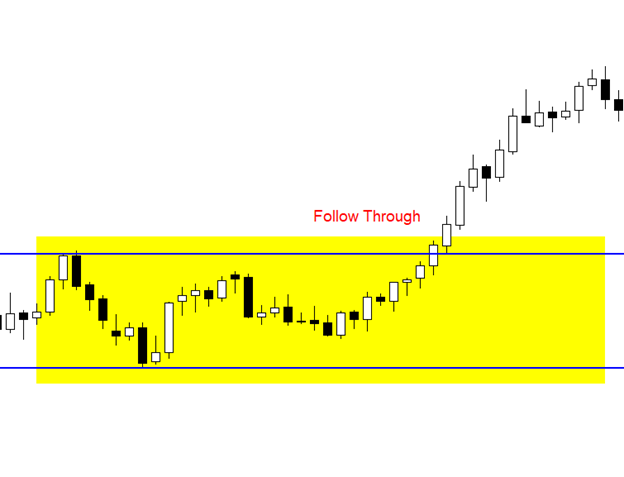
A. Breakout With Immediate Follow-Through
This is the real thing.
Signs of a valid breakout:
- strong close beyond the level
- strong momentum
- shallow pullback
- pressure builds quickly
- next candles hold above the breakout zone
These are ideal for continuation setups.
B. Breakout → Pullback → Continuation
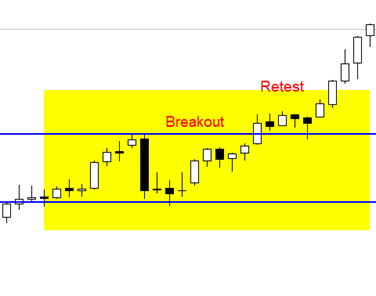
This is the most reliable breakout structure.
Breakout
→ retest
→ continuation
This is the foundation of your Breakout–Pullback (BOPB) setup.
This structure works because price respects the new market structure after the breakout — former resistance becomes support (and vice versa).
👉 Learn how structure defines pullbacks and retests in Market Structure 101 — How Price Really Moves
C. Breakout → Rejection → Full Failure
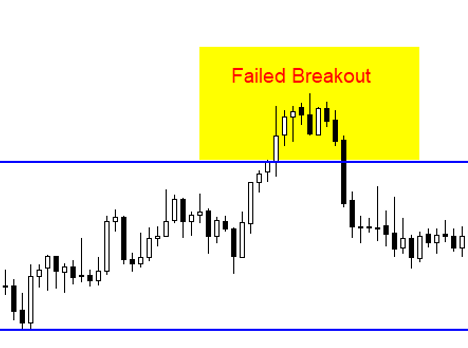
This is the trap.
Characteristics:
- breakout wicks
- no follow-through
- fast rejection
- opposite direction takes control
- trapped traders exit aggressively
Failed breakouts produce:
- reversals
- range expansions
- trend shifts
And they are extremely profitable.
How to Identify Real Breakouts
To avoid traps, professionals use this simple rule:
If the breakout doesn’t show strength, treat it as a trap.
Look for:
- strong breakout candle
- strong close
- no immediate rejection
- shallow pullback
- no huge wick
- fast follow-through
If any of these are missing → caution.
If multiple are missing → probable failure.
Breakout strength is revealed through candlestick behavior, not indicators.
👉 Learn how to read breakout candles, closes, and wicks in Price Action Candlesticks: How Professionals Read Every Bar
Failed Breakouts — The Most Powerful Reversal Signal
Failed breakouts reveal who is trapped.
This is where the market exposes weak positioning:
- late breakout traders
- impatient traders
- traders using tight stops
- emotion-driven entries
A failed breakout creates an explosive move in the opposite direction because:
- breakout traders exit
- reversal traders enter
- liquidity shifts
- momentum flips
These are the best entries for:
- reversals
- trend shifts
- range plays
- liquidity grabs
The Anatomy of a Failed Breakout (Step-by-Step)
1. Price attempts breakout
Traders pile in. Stops cluster on the other side.
2. Breakout has weak follow-through
Wicks appear. Volume dies. Slow candles.
3. Fast rejection
One strong candle erases the breakout.
4. Breakout traders are trapped
Their stops become liquidity.
5. Opposite side takes control
Momentum shifts.
6. Strong move in opposite direction
This is the clean, high-probability entry.
Where Failed Breakouts Happen Most Often
Failed breakouts almost always occur at:
- Range highs and lows
- Major support & resistance
- Trend exhaustion points
- Liquidity zones (wick clusters)
- Psychological levels (round numbers)
- After long one-sided moves
Gold (XAUUSD) is notorious for these traps.
S&P 500 produces them cleanly around previous highs/lows.
Trading Breakouts, the Professional Way
Professionals don’t chase breakouts.
They:
✔ Buy breakouts only with confirmation
✔ Prefer pullback entries
✔ Avoid breakout candles with large wicks
✔ Watch for traps
✔ Take failed breakouts as reversal entries
✔ Use structure, not emotion
Examples of Clean Breakout Logic (What You Look For)
A. Breakout → Retest → Continuation
Perfect for trend trading.
B. Breakout → Weak follow-through → Failure
Perfect for reversal trading.
C. Range breakout → Fake → Range expansion
Classic trap scenario.
D. Trendline break → Failure → Return to trend
One of the cleanest traps.